
India's new manufacturing project announcements more than halved in the fourth quarter of FY26, falling 60 per cent sequentially and 78 per cent year-on-year to approximately 1.7 trillion, driven by global uncertainties, geopolitical conflicts in West Asia, and existing unutilised manufacturing capacity.

The benchmark BSE Sensex's trailing 12-month price-to-earnings (P/E) multiple has declined to 20.2x, its lowest since May 2020, driven by a record $42 billion FPI selloff since September 2024 and concerns over corporate earnings and economic growth.

There are hopes of a turnaround in overall corporate earnings after six quarters of single digit growth.

Vietnamese automobile major VinFast is rapidly expanding its retail network in India, aiming for 75 dealerships across 60 cities by the end of 2026, while also building a comprehensive EV ecosystem.

Renault India has launched the all-new Renault Duster, featuring a turbo petrol engine and advanced features, with dispatches underway nationwide.

Between now and 2030, four new models will be designed and assembled in India, including 100 per cent electric and full-hybrid cars.
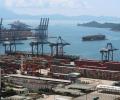
With the Iran war escalating sharply and crisis deepening in the global energy market, India on Monday unveiled a coordinated plan to support exporters and shippers caught in the fallout.

Share of IPOs opening above issue price drops to 64.6%, median gains shrink sharply amid market volatility.

With TDP and YSRCP trying to score political points, the sacred laddu may well create a storm in days to come.

Sri City in Andhra Pradesh is dubbed the "Cooling City" of India, accounting for nearly 40 per cent of the air conditioners (ACs) manufactured in the country. On Tuesday, this industrial hub added one more feather to its cooling credentials. Carrier Air Conditioning and Refrigeration Ltd, the Indian arm of the oldest AC company in the world, Carrier Global, signed a deal to invest around ~1,000 crore for a new manufacturing unit at Sri City.

Jaguar Land Rover will begin assembling premium cars at its new Tamil Nadu plant on February 9, marking a step towards full-scale luxury car manufacturing in India.

Speculation about rising competition from global majors has led to shares of major Indian automobile manufacturers such as Mahindra & Mahindra (M&M), Maruti Suzuki India, and Tata Motors taking a hit on the BSE.

The India-EU free trade deal could help Indian-made cars enter Europe at lower costs and challenge Chinese dominance.

Six months after its India debut, the Vietnamese automaker has overtaken established players such as Hyundai Motor, BMW, Kia, and Chinese EV major BYD.

'In the last one year, we have added more than Rs 1.7 trillion, and we are on track.'

The proposed trade deal with the 27-nation European Union (EU) is expected to provide zero-duty access to the $95 billion European market for Indian textile and apparel manufacturers. Currently, India's share of the European market is just 6 per cent, or $5.5 billion.

The fiscal tilt towards capex benefits companies in investment-related sectors like capital goods, defence equipment, engineering & construction and metal & mining. The planned cut in revenue expenditure will weigh on companies in consumption sectors like FMCG, consumer durables and retail.

After two years of strong gains, smallcap stocks fell sharply in 2025, but the correction may be setting up opportunities for long-term investors.
GSM, which is potentially eyeing a Hong Kong listing and was recently valued at $20 billion, operates on a distinct model -- it owns the e-taxis and employs the drivers, while also supplying cars to independent drivers or fleet operators.

'We have tags of state animals and birds. However, the invisible world of microbes is doing a lot of things for us in nature, not just for human beings but for the entire life.'
 © 2026 Rediff.com - Advertise with us - Disclaimer - Privacy Policy - Sitemap - Feedback - About us - Terms of use - Grievances